A Decade in Review: The Investment Council, Business–Government Dialogue, and Challenges on the Road to EU Accession
- January 9, 2026

For years, the Investment Council has been at the heart of government–business relations, aiming to facilitate dialogue on key challenges and help identify solutions to foster a more favourable business climate.
In this interview, Diana Leka (Angoni), Head of the Investment Council Secretariat, offers a clear overview of this relationship, the key challenges facing the business environment, and the progress of reforms over the years.
She analyses the key findings from business surveys, highlighting structural challenges as well as the opportunities presented by the European integration process.
Ms Leka reflects on the role of public–private dialogue and the importance of effective consultation for policy implementation, as well as her perspective on expectations and priorities for 2026 and the coming decade.
As we leave 2025 behind, can we take stock of some of the key moments over the years that you still consider important for the business–government relationship, and your role as a point of contact with your ongoing recommendations?
Within the framework of the investment climate, the debate mainly focuses on three pillars: the stability of the political environment, economic growth, and the functioning of governance and institutions, including the implementation of the legal and regulatory framework.
The Investment Council has focused primarily on the third pillar, which, for businesses, relates specifically to how easy it is to register a company and pay taxes, how accessible the country is to foreign investors, the security of property, and the openness of the local economy to global markets. It also covers access to credit and other financial instruments, the functioning of courts in resolving business disputes, the operation of the labour market, and the quality of infrastructure, IT and communication networks, energy supply—including renewables—and more.
Of course, an important role is also played by the quality of education and healthcare services, as well as the extent to which the economy in general—and the legal framework in particular—supports investments that drive digitalisation and innovation.
These issues have been discussed at the Council’s roundtables, creating a different model of dialogue between the government/institutions and the business community, where arguments encourage all parties to listen and offer recommendations. More specifically, I would highlight:
- A) The timely involvement of businesses in discussions on fiscal management policies, which remains essential to ensure their proper implementation.
Between 2015 and 2018, the Investment Council prioritised and debated issues related to business interactions with tax and customs authorities, informality, VAT refunds, administrative appeals, and investment incentives—challenges that at the time were critical for businesses.
Beyond the progress made and several significant changes (45 legal and regulatory interventions), these issues still need to be addressed more systematically—whether through the Fiscal Council or other instruments, including the Investment Council—particularly within the framework of EU integration processes.
For effective law enforcement, it is crucial that all parties engage more seriously in the public consultation process, which serves as a tool to facilitate the practical implementation of laws. The pandemic taught us that national challenges can be better addressed when the public and private sectors communicate appropriately and with mutual trust.
For example, the government introduced measures such as the deferral of tax payments, financial support for wages, and state guarantees for business loans. These were designed taking into account the needs and realities of businesses, with the Investment Council already established as a structure that contributed to the process.
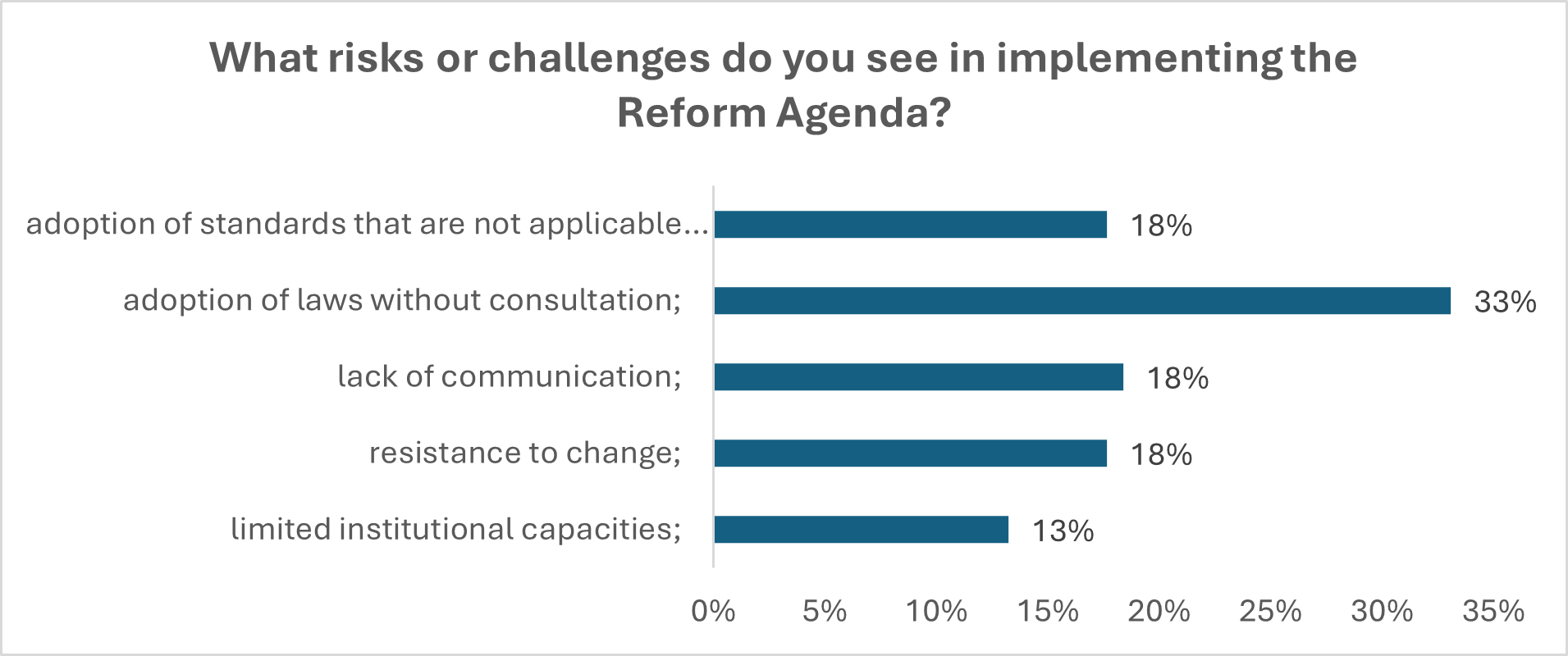
Meanwhile, stakeholders still report that consultation periods are often too short, well-reasoned institutional responses are lacking, and a significant portion of recommendations is not taken into account, creating the impression that a listening problem persists at both central and local levels.
At the same time, businesses also need to engage and advocate more strategically, as the volume of laws affecting the economy within the framework of EU integration processes is very large and requires attention now, not later, after they are approved and become mandatory.
On the path toward European integration, a more transparent and sustainable collaboration between the public and private sectors remains essential to maximise the benefits of integration—particularly the proper functioning of the internal market in terms of safety and quality, as well as the promotion of fair competition.
- C) Formalising and prioritising support for small and medium-sized enterprises, within the framework of accelerating the country’s EU accession.
At this stage, the process is primarily led by institutions, offering excellent opportunities for investment from a long-term perspective.
However, in the Investment Council’s analyses of entrepreneurial challenges—covering productivity, innovation, and alignment with EU standards—it appears that from a local “win-win” perspective, businesses need to reflect promptly and organise to advocate more effectively for their rights, while the government and donors should consider transitional instruments.
What challenges do you see for businesses based on your surveys, and where should they focus more—on human capital, investments in technology and information, or digitalisation?
The work of the Investment Council is based on the perceptions of its members from the business community regarding the challenges they face in their operations. In this regard, surveys are one of the tools we use to “uncover” the key issues that concern businesses.
Thus, based on the most recent survey on the country’s investment climate, informality remains one of the core and significant challenges in the Albanian economy, confronting businesses on a daily basis.
Since 2017, the perception of informality in the country has remained consistently high: 7 out of 10 companies report that informal practices are present in the market. This stability indicates that, despite interventions in recent years, informality is still seen as a deeply rooted and persistent phenomenon. The main driving factors behind informality are identified as corruption and unfair competition.
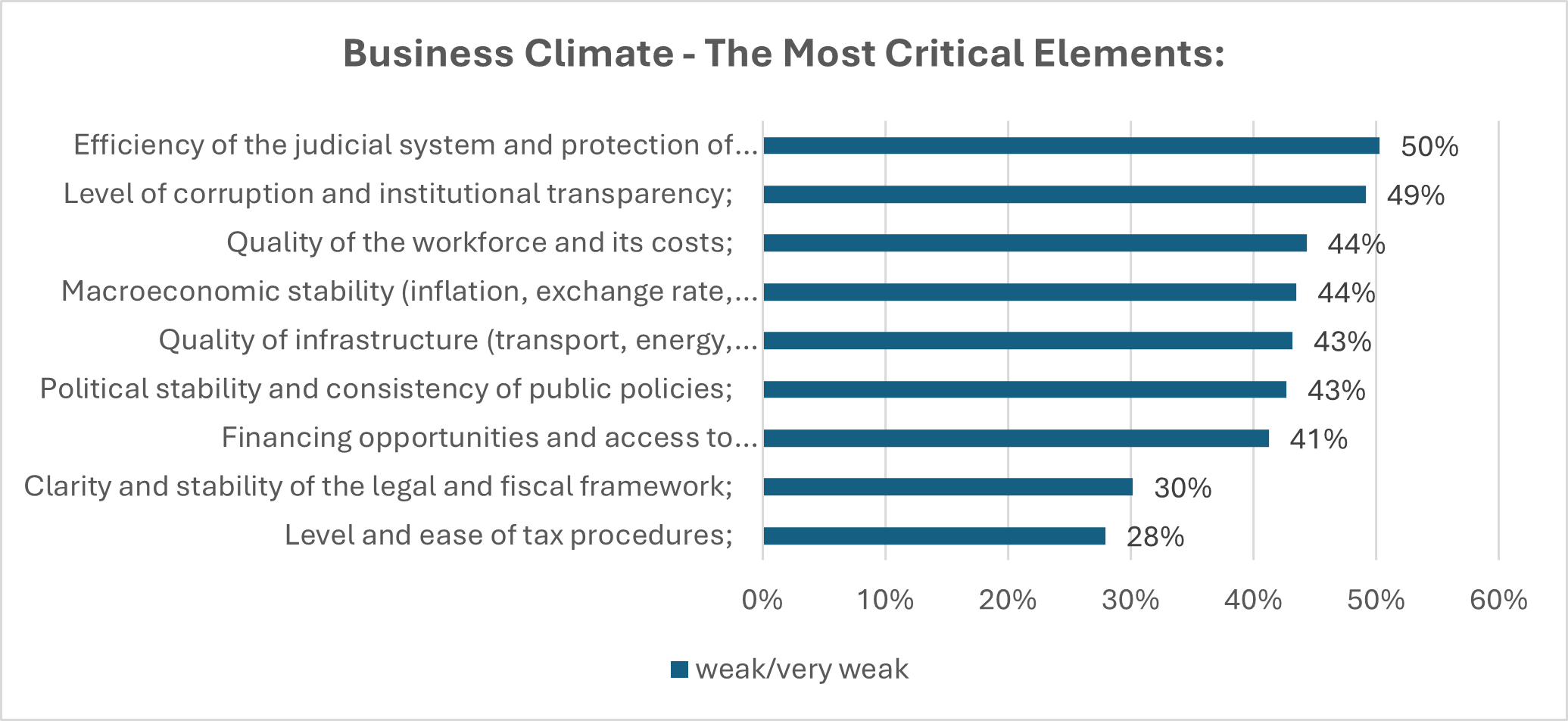
Additionally, businesses perceive that the business climate in Albania today is primarily influenced by three critical factors: the efficiency of the judicial system and the protection of business rights, the level of corruption and institutional accountability/transparency, and the quality and cost of the workforce.
A weak judicial system and corruption undermine business confidence and security, while challenges related to the workforce and its costs affect productivity and competitiveness. Improving these factors is critical to enhancing the business climate and attracting sustainable investment.
Considering our country’s current position on the path to EU integration, I would say that the main challenge for businesses will be their ability to adapt to European market rules and requirements, particularly in terms of complying with production and service standards.
I believe that the sooner companies understand this, the easier the transition will be to this large and highly competitive market.
Investments in technology, digitalisation, and human resources are prerequisites for enabling the improvement of standards.
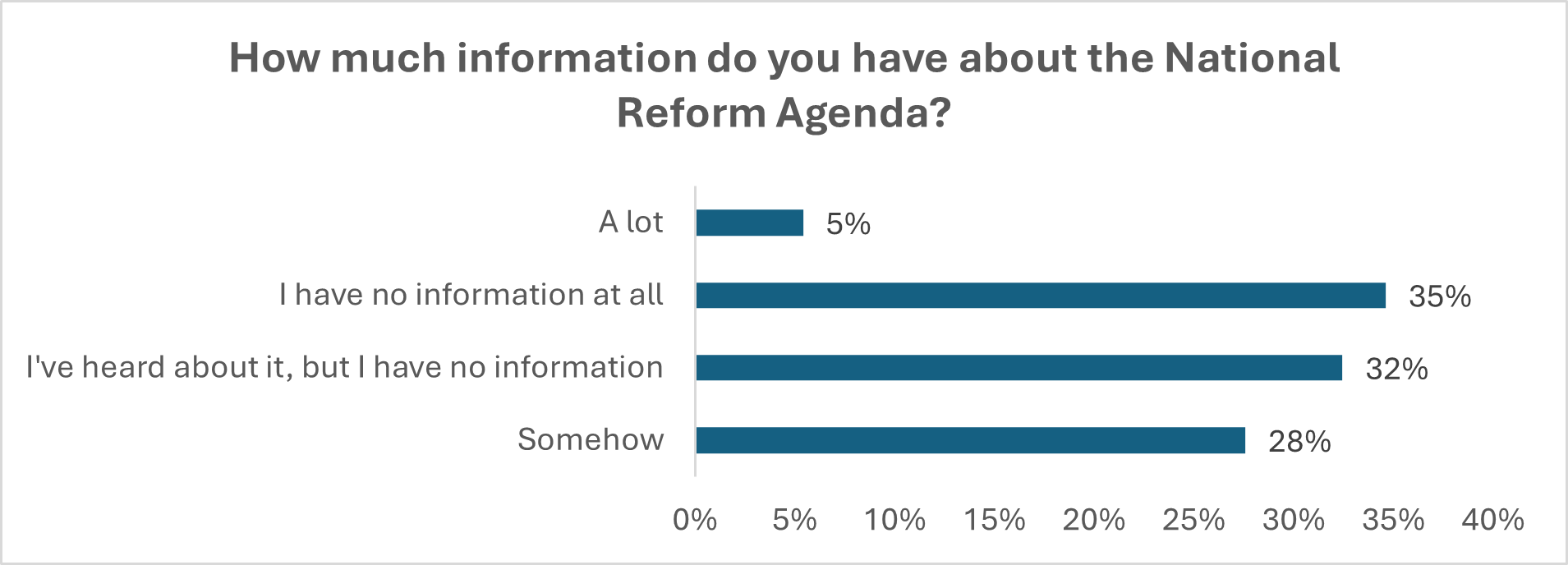
Our most recent survey shows that Albanian companies have very positive expectations regarding EU integration, but they lack clear information about the process. I believe this is an issue that deserves special attention, not only from institutions but also from business chambers and associations, which should start as soon as possible to inform and train companies, especially considering that the majority of businesses in the country are SMEs.
What are some areas where the administration needs to improve, based on the recommendations you have provided following the surveys conducted with businesses?
I want to emphasise that the interaction between businesses and institutions has been a consistent focus for us, with particular attention to fiscal administration and tax reporting, inspections, administrative appeals, VAT refunds, e-permits, public consultation, and similar areas.
The fight against corruption, institutional and legal stability, accountability, transparency, and increased professionalism, as well as the effective consultation of draft policies with businesses, are aspects that should remain a focus for both central and local administrations.
The areas your surveys cover are very diverse, and the recommendations are numerous. How aware and engaged are businesses and institutions in reflecting on these proposals aimed at improving the business climate?
I believe the situation has changed for the better, as we monitor it continuously. From the latest update in June 2025, we observe an acceleration in the engagement of institutions and business associations in three key areas:
- a) regarding the resolution of issues related to access to finance,
- b) innovation and digitalization of micro, small, and medium-sized enterprises (MSMEs), as well as
- c) the operationalisation of Technology and Economic Development Areas (TEDAs). These initiatives reflect institutional engagement to accelerate structural reforms and consolidate the business climate in line with European standards and the requirements of the negotiation chapters on economic development, competition, and an investment-friendly environment.
Which sectors do you see as having the most potential or challenges, and what measures should all actors take to maximise the overall benefit to the economy? I am thinking here of tourism, energy, and exports in general—each of which faces its own bottlenecks requiring investments or the promotion of vocational education tailored to sectoral needs, among other actions?
Investments in sectors such as renewable energy, tourism, construction, logistics, and increasing domestic processing of natural resources can be considered areas with strong potential for the country.
At the same time, competitiveness and market expansion pose challenges for the manufacturing and agro-processing sectors, as EU market integration will expose them more directly to strict technical standards and certification requirements.
Here, the barriers are deeper due to fragmentation, a lack of modern quality control equipment, and the difficulty of meeting the demands of European supply chains.
On the other hand, the services sector—particularly ICT and professional services—shows higher dynamism and easier access to international markets, mainly due to lower technical barriers and the digital nature of the products. Meanwhile, the tourism sector will face challenges related to the lack of industry standards in hotels, guesthouses, and other services, including star-rating certifications.
To meet these standards, businesses need to make significant investments; for example, improving fire safety requires investment in automatic alarm and suppression systems, evacuation routes, as well as other infrastructure elements—including equipment, furnishings, and electrical installations—to ensure compliance with EU standards and enhance the quality of tourism services.
Accordingly, we at the Investment Council have suggested the creation of transitional instruments, such as grants or soft loans, to support the industry’s adaptation to European standards.
How do you envision 2026—first for your platform, meaning where will your focus be, and second for businesses and the economy as a whole, based on what you observe?
In fact, we were recently awarded the 2025 prize by the Tirana Chamber of Commerce for our contribution to promoting regulatory reforms in the country’s investment climate.
This is certainly a special recognition, which also places significant responsibilities on us for 2026.
I believe the new decade of the Investment Council’s activities will see a more consolidated collaboration with the business community and institutions, aimed at facilitating adaptation and integration into the European single market.
We have observed that within the business community—especially among SMEs—there is a lack of information about this process and its impact on their activities. Therefore, an informative campaign and awareness-raising efforts targeting small and medium-sized enterprises in the country should begin as soon as possible.
In cooperation with business chambers and associations, institutions should begin establishing working groups to ensure the timely and proper dissemination of information.
I believe the Investment Council remains a serious hub of knowledge and monitoring of business challenges in the country, and it will certainly continue to act as a bridge between businesses and institutions, leveraging the experience built over these 10 years of activity.
Monitor Magazine, “A Decade of the Investment Council: Business–Government Dialogue and Challenges on the Road to the EU,” January 9, 2025. Available at: https://monitor.al/bilanci-i-nje-dekade-te-ki-dialogu-biznes-qeveri-dhe-sfidat-drejt-be-2/